Shilajit — a tar-like resin found seeping from Himalayan and Central Asian rock formations — has been used in Ayurvedic medicine for centuries as a rasayana, a class of preparations thought to promote vitality and longevity. Today it is widely marketed as an energy booster and anti-fatigue supplement, but the scientific evidence behind these claims is still in early stages.
This article reviews what the published research actually says about shilajit and fatigue, explains the proposed biological mechanisms in plain terms, and is honest about where the evidence is limited, preliminary, or based on animal models rather than robust human trials.
Key Takeaways
- Early human research suggests shilajit may help maintain muscular strength during fatiguing exercise, but studies are small and short-term [4].
- Animal studies point to effects on mitochondrial bioenergetics and the stress-response (HPA) axis as plausible mechanisms [2], but these have not been confirmed in humans.
- Fulvic acid and dibenzo-alpha-pyrones are the main active components proposed to support cellular energy production.
- Traditional Ayurvedic use for high-altitude fatigue has biological plausibility but is not backed by controlled clinical evidence [1].
- Shilajit is not a stimulant; any fatigue-related benefit, if real, would be gradual and modest rather than immediately noticeable.
What Is Shilajit and What Does It Contain?
Shilajit is formed over centuries from the partial decomposition of plant matter compressed between rock layers. The resulting resin is rich in fulvic acid, humic acid, and a class of compounds called dibenzo-alpha-pyrones (DBPs). It also contains a broad spectrum of trace minerals including iron, zinc, magnesium, copper, and selenium [3].
Fulvic acid is the component researchers most often point to when discussing energy metabolism. It can act as an electron carrier in cellular reactions and may enhance the delivery of nutrients — including other minerals and small molecules — across cell membranes. Dibenzo-alpha-pyrones are thought to interact with mitochondrial electron transport, the process cells use to convert food into usable energy (ATP). These mechanisms are biologically plausible, but demonstrating them clearly in humans requires more research than currently exists.
Human Evidence: Shilajit and Exercise-Related Fatigue
The most directly relevant human study examined whether shilajit supplementation could reduce fatigue-related declines in muscular strength. In this placebo-controlled trial, participants who took shilajit maintained strength levels better after fatiguing exercise than those in the placebo group, and showed higher serum hydroxyproline levels — a marker related to collagen turnover and connective tissue integrity [4].
A more recent open-label pilot study lasting 28 days found that supplementation with a standardized shilajit resin (TruBlk™) was associated with improvements in physical performance measures and changes in certain blood biomarkers in healthy adults [5]. However, because this was an open-label pilot study without a control group, these findings should be treated as hypothesis-generating rather than conclusive. Participants knew they were taking the supplement, which introduces the possibility of placebo effects.

Both studies used relatively small sample sizes and short durations. They provide a starting point for larger, better-controlled research rather than definitive proof that shilajit reliably reduces fatigue.
Animal Research: Chronic Fatigue Syndrome Models
A notable animal study investigated shilajit’s effects in a rat model of chronic fatigue syndrome (CFS). Rats given shilajit showed attenuated behavioral symptoms of fatigue compared to controls, with the researchers observing effects on the hypothalamic-pituitary-adrenal (HPA) axis — the body’s central stress-response system — as well as improvements in markers of mitochondrial bioenergetics [2].
These findings are mechanistically interesting because they suggest shilajit may influence both the hormonal stress response and cellular energy production simultaneously. However, results from rodent models do not translate directly to humans, and chronic fatigue syndrome is a complex condition not easily replicated in an animal model. This research is best understood as providing mechanistic clues rather than clinical guidance.
Traditional Use: Shilajit at High Altitude
One review examined shilajit’s traditional application for high-altitude problems, including altitude sickness and high-altitude fatigue — conditions caused by reduced oxygen availability [1]. Shilajit has historically been used by populations in the Himalayas as a general tonic for the physical demands of living and working at elevation.
The proposed explanation involves shilajit’s trace mineral content and the potential role of fulvic acid in supporting cellular oxygen utilization. At altitude, mitochondrial efficiency matters more because oxygen is scarce; if shilajit genuinely supports mitochondrial function, this context is where it might theoretically be most useful. That said, this review draws on traditional use and early science rather than controlled clinical trials of altitude performance.
Proposed Mechanisms: How Might Shilajit Affect Energy?
Several non-exclusive mechanisms have been proposed to explain shilajit’s potential effects on energy and fatigue. First, fulvic acid may act as a carrier molecule, helping transport nutrients and minerals into cells more efficiently. Second, dibenzo-alpha-pyrones are thought to interact with the mitochondrial electron transport chain — specifically by acting as coenzyme Q10 (CoQ10) mimics or preserving CoQ10 levels, which plays a central role in ATP synthesis [3].
Third, shilajit’s trace mineral content may address subclinical deficiencies that contribute to fatigue. Iron deficiency, for example, is a well-established cause of fatigue; magnesium is required for hundreds of enzymatic reactions including ATP production. If a person’s fatigue stems partly from mineral insufficiency, shilajit’s mineral load could plausibly provide some benefit — though supplementing specific known deficiencies directly would be more targeted.
Finally, effects on the HPA axis observed in animal studies suggest shilajit might modulate the body’s physiological response to stress and overtraining [2]. Chronic overactivation of the HPA axis is linked to fatigue; dampening this response could in theory support recovery. These mechanisms are plausible but not yet confirmed in well-powered human trials.
What the Evidence Does Not Show
It is important to be clear about what has not been demonstrated. No large, randomized, double-blind, placebo-controlled human trial has established that shilajit reliably reduces fatigue in the general population. The existing human studies are small, short in duration, and in some cases lack control groups [5]. The animal data is mechanistically interesting but cannot be assumed to apply directly to people.
Shilajit is also not a stimulant. Unlike caffeine or other compounds that produce a noticeable short-term energy effect, any benefit from shilajit would be expected to emerge gradually over weeks of consistent use, if it emerges at all. People seeking an immediate energy boost are likely to be disappointed.
🛒 Where to Buy Shilajit
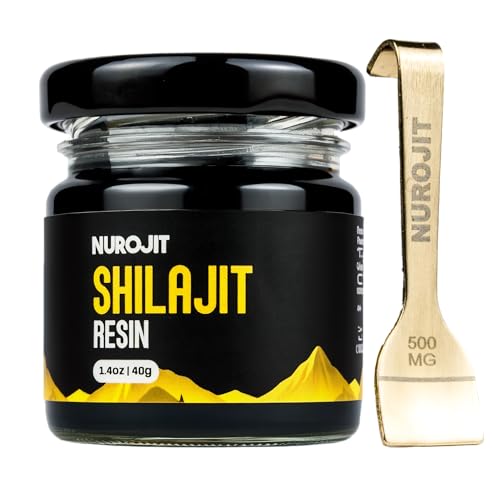
- Pürblack Live ResinLab-tested / studied
resin, ~300-500 mg/day — Premium purified resin, third-party heavy-metal tested; widely regarded as a reference-quality resin. - Toniiq Shilajit
capsules, 500 mg — Standardized fulvic-acid %, third-party tested generic. - Nutricost Shilajit Extract
capsules, 500 mg — Low-cost large-count bottles. - Double Wood Shilajit
capsules, 500 mg — Budget-friendly, COA on request.
As an Amazon Associate we earn from qualifying purchases. Shilajit quality varies widely — always choose a product with a published third-party heavy-metal test (COA) before buying.
A Note on the Evidence
Most shilajit research involves small studies, short durations, and in several cases animal models — the evidence for anti-fatigue effects in healthy humans is promising but not conclusive. Raw or low-quality shilajit may contain heavy metals; only use products that have been independently tested for purity. Pregnant or breastfeeding individuals, people with kidney or liver conditions, and those on iron-related medications should consult a doctor before using shilajit.
Frequently Asked Questions
Does shilajit increase energy levels?
There is early evidence that shilajit may support energy-related processes at the cellular level — particularly through effects on mitochondrial function and trace mineral delivery — but no large human trial has confirmed a reliable energy-boosting effect. One human study found it helped maintain muscle strength under fatigue conditions [4], which is related but not the same as a direct energy increase.

How long does it take for shilajit to work for fatigue?
Based on available studies, any effects would be expected to develop over several weeks of consistent supplementation rather than immediately. The 28-day pilot study [5] and the exercise fatigue trial [4] both ran for several weeks before measuring outcomes. There is no evidence for acute, same-day fatigue relief.
Is shilajit useful for chronic fatigue syndrome (CFS)?
Animal research found that shilajit attenuated behavioral symptoms of CFS in rats, with effects on the HPA axis and mitochondrial bioenergetics [2]. However, animal models of CFS are imperfect proxies for the human condition, and no clinical trial has tested shilajit in people diagnosed with CFS. It would be premature to recommend it for this purpose.
What compounds in shilajit are thought to fight fatigue?
Fulvic acid, humic acid, and dibenzo-alpha-pyrones are the primary candidates. Fulvic acid may enhance nutrient transport into cells; dibenzo-alpha-pyrones are thought to support mitochondrial electron transport, the process that generates ATP; and the trace mineral content may address deficiencies that contribute to fatigue [3].
Can athletes use shilajit to improve performance?
A human study found that shilajit supplementation reduced fatigue-induced declines in muscular strength compared to placebo [4], and an open-label pilot found some physical performance improvements over 28 days [5]. These are promising early signals, but the evidence base is too small and the studies too short to make firm performance recommendations.
Is shilajit safe to take for energy?
Shilajit has a long history of traditional use and reviews of available evidence find it generally well-tolerated at typical doses [3]. However, raw or unprocessed shilajit can be contaminated with heavy metals and other impurities. Quality and sourcing matter significantly, and supplementation should be discussed with a healthcare provider, particularly for people with existing health conditions.
References
- Meena H et al. Shilajit: A panacea for high-altitude problems. International journal of Ayurveda research (2010). PMID 20532096
- Surapaneni DK et al. Shilajit attenuates behavioral symptoms of chronic fatigue syndrome by modulating the hypothalamic-pituitary-adrenal axis and mitochondrial bioenergetics in rats. Journal of ethnopharmacology (2012). PMID 22771318
- Stohs SJ et al. Safety and efficacy of shilajit (mumie, moomiyo). Phytotherapy research : PTR (2014). PMID 23733436
- Keller JL et al. The effects of Shilajit supplementation on fatigue-induced decreases in muscular strength and serum hydroxyproline levels. Journal of the International Society of Sports Nutrition (2019). PMID 30728074
- Yadav D et al. Safety and Efficacy of TruBlk™ Shilajit Resin Supplementation on Physical Performance and Blood Biomarkers in Healthy Adults: A 28-Day Open-Label Pilot Study. Cureus (2026). PMID 41613504
These statements have not been evaluated by the Food and Drug Administration. This information is not intended to diagnose, treat, cure, or prevent any disease. Content is for informational purposes only and is not medical advice; consult a qualified healthcare provider before starting any supplement. As an Amazon Associate we earn from qualifying purchases.
