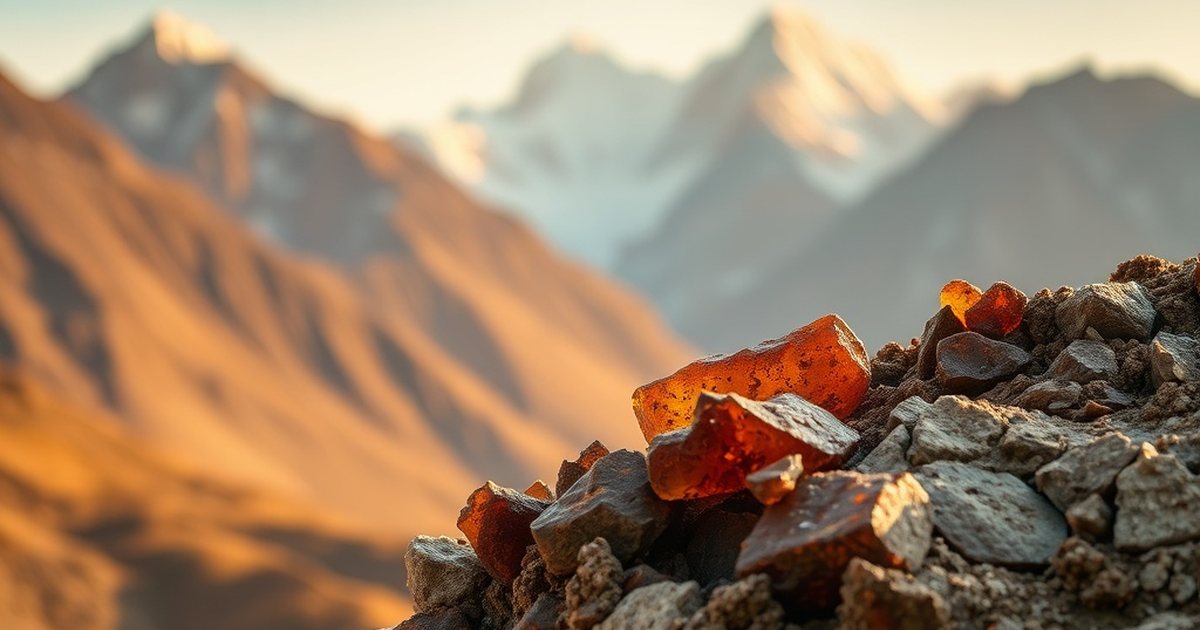
Shilajit is increasingly promoted as an adaptogen—a substance that supposedly helps the body resist physical and psychological stress. Formed over centuries from decomposed organic matter compressed in mountain rock, it contains fulvic acid, humic acids, dibenzo-alpha-pyrones, and a broad spectrum of trace minerals. These compounds have attracted genuine scientific curiosity, and a small body of research has begun to examine whether shilajit influences the stress response, fatigue, and anxious behavior.
The term ‘adaptogen’ has roots in Soviet-era pharmacology and traditional Ayurvedic medicine, but it is not a regulated clinical designation. That gap between traditional classification and controlled clinical evidence matters enormously for consumers. This article walks through the proposed mechanisms, the available studies, and the significant limitations you should understand before treating shilajit as a stress or mood solution.
Key Takeaways
- Shilajit has biological plausibility as an adaptogen via its effects on the HPA axis, mitochondrial energy, and oxidative stress pathways.
- The best direct animal evidence for its stress-related effects involves HPA axis modulation in a chronic fatigue model [1], not human mood trials.
- Studies showing anxiety-reducing or adaptogenic activity mostly tested polyherbal formulas containing shilajit, not shilajit in isolation [2][3].
- No large, controlled human trials have confirmed that shilajit reliably reduces stress, anxiety, or depressed mood in healthy adults.
- Purity and heavy-metal content are serious concerns with raw or poorly processed shilajit—always choose a third-party tested, purified product.
What 'Adaptogen' Actually Means
An adaptogen, loosely defined, is a compound that helps an organism maintain homeostasis under various stressors—physical, chemical, or biological—without causing significant side effects or disrupting normal function. Classic candidates include ashwagandha, rhodiola, and eleuthero. Shilajit has been grouped into this category in Ayurvedic practice for centuries, primarily under the concept of ‘rasayana,’ meaning a rejuvenating tonic.
Scientifically, the adaptogen classification is earned by demonstrating effects on stress-mediating systems—most importantly the hypothalamic-pituitary-adrenal (HPA) axis, which governs cortisol release, and markers of oxidative stress. Research on shilajit has touched both of these pathways, though the evidence remains early-stage, mostly animal-based, and often involves multi-ingredient formulations rather than isolated shilajit.
The HPA Axis: Shilajit's Most Relevant Stress Pathway
The hypothalamic-pituitary-adrenal axis is the body’s central stress-response circuit. Chronic activation—sustained high cortisol—is associated with fatigue, impaired cognition, disrupted sleep, and depressed mood. If shilajit does have adaptogenic properties, modulating this axis is the most plausible mechanism.
One rat study examined shilajit in the context of chronic fatigue syndrome, a condition defined partly by dysregulated stress physiology and mitochondrial inefficiency. Researchers found that shilajit attenuated behavioral symptoms of CFS and appeared to modulate HPA axis activity alongside improvements in mitochondrial bioenergetics [1]. This is the strongest direct evidence linking shilajit to stress-related physiology, but it involves animal subjects under experimentally induced fatigue—not humans with mood disorders or ordinary work stress.

The mitochondrial angle is worth noting separately. Shilajit’s fulvic acid and dibenzo-alpha-pyrones are thought to support electron transport chain efficiency, which influences cellular energy production. Poor mitochondrial function correlates with fatigue and low mood, so the hypothesis that shilajit could indirectly support mood via energy metabolism has a biochemical basis—even if direct human evidence is limited.
Anxiety: What Animal Models Suggest
Several studies have investigated anxiety-like behavior in animal models using shilajit as part of a polyherbal formulation. One study tested a multi-herb preparation—which included shilajit alongside other Ayurvedic ingredients—in rats experiencing ethanol withdrawal, a state associated with heightened anxiety. The formulation reduced anxiety-like behavior in these animals compared to controls [2]. A second study found that a similar polyherbal Ayurvedic compound demonstrated adaptogenic activity in animal stress models [3].
The critical limitation here is that neither study isolated shilajit as the active agent. Both tested combination formulas. This is common in Ayurvedic research, where synergy between ingredients is considered fundamental, but it makes it impossible to attribute the observed effects specifically to shilajit. Results from these studies support the broader tradition of adaptogenic herb formulas—not shilajit as a standalone anxiolytic.
Oxidative Stress: An Indirect Link to Mood
Oxidative stress—an imbalance between free radicals and antioxidant defenses—is increasingly implicated in the biology of depression and anxiety. Shilajit has been investigated for its antioxidant potential, including in a study examining its effects on oxidative stress induced by lead exposure in poultry. Shilajit was included among adaptogens that showed antioxidant properties in this context [4].
While this is a long way from a human mood trial, it does suggest a mechanistic thread: fulvic acid in shilajit may chelate metal ions and support endogenous antioxidant pathways. Reduced oxidative burden in neural tissue could theoretically support better mood regulation. This is a hypothesis, not a demonstrated clinical outcome, and this study involved birds under heavy-metal stress rather than humans with mood concerns.
Alcohol, Stress, and Shilajit: A Narrow Research Window
One study examined the combination of ashwagandha and shilajit in a mouse model of alcohol addiction, a behavior closely linked to stress dysregulation and HPA axis dysfunction [5]. Chronic alcohol use and withdrawal are associated with elevated anxiety, altered cortisol patterns, and mood instability—so substances that modulate these pathways are of interest to addiction researchers.
Again, the study combined shilajit with another well-studied adaptogen (ashwagandha), making it impossible to credit the effects to shilajit alone. The research context—alcohol addiction in mice—is also quite specific and should not be generalized to everyday stress management in healthy adults.
Honest Assessment: Where the Evidence Stands
Taking stock of the available literature, a clear picture emerges: there is a plausible biological case for shilajit having adaptogenic and stress-modulating properties. The compounds it contains—particularly fulvic acid and dibenzo-alpha-pyrones—interact with pathways relevant to the stress response, mitochondrial function, and oxidative balance. Animal studies involving shilajit, alone or in formulas, have produced results consistent with mild adaptogenic activity [1][3].

What is missing is rigorous human evidence. There are no large, well-controlled randomized trials specifically testing shilajit’s effect on subjective stress, cortisol levels, or validated mood outcomes in humans. Most studies are in rodents, most use polyherbal formulations, and sample sizes are small throughout. This does not mean shilajit has no effect—it means we genuinely do not know the size, consistency, or clinical significance of any effect in people.
If you are considering shilajit for mood or stress, it is reasonable to view it as a low-risk supplement with some preliminary mechanistic support, rather than a proven treatment. It is not a replacement for addressing the sources of chronic stress or for clinically validated interventions for anxiety and depression.
🛒 Where to Buy Shilajit
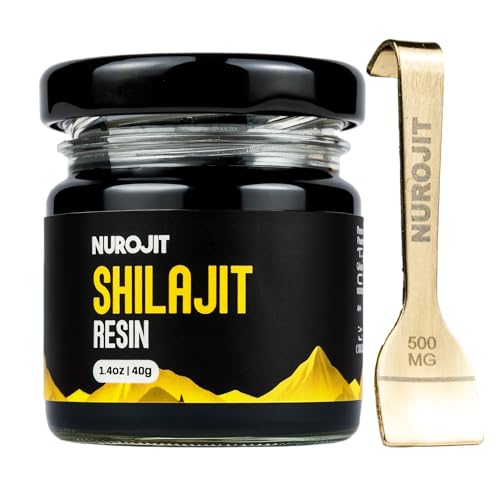
- Pürblack Live ResinLab-tested / studied
resin, ~300-500 mg/day — Premium purified resin, third-party heavy-metal tested; widely regarded as a reference-quality resin. - Nootropics Depot PrimaVie ShilajitClinically studied
capsules, 250 mg — PrimaVie, the standardised shilajit extract used in published human trials. - Zazzee Shilajit 40:1 Extract
capsules, 40:1 extract — Standardised to 50% fulvic acid. - Swanson Shilajit Extract
capsules, 400 mg, 60 count — Budget option from a long-established supplement brand.
As an Amazon Associate we earn from qualifying purchases. Shilajit quality varies widely — always choose a product with a published third-party heavy-metal test (COA) before buying.
A Note on the Evidence
The evidence base for shilajit’s effects on mood and stress is preliminary, consisting largely of animal studies and multi-ingredient formulations; clinical benefits in humans have not been established. Raw or low-quality shilajit can contain dangerous levels of heavy metals—always use a purified product with third-party testing, and consult your doctor before use if you are pregnant, have kidney or liver conditions, take medications, or have a diagnosed mood disorder.
Frequently Asked Questions
Is shilajit a proven adaptogen?
Shilajit has been classified as an adaptogen in Ayurvedic medicine for centuries, and some animal research supports effects on stress-related systems. However, ‘adaptogen’ is not a regulated clinical term, and human trial evidence is limited. Studies using polyherbal formulations containing shilajit have shown adaptogenic activity in animal models [3], but isolated, well-powered human data are lacking.

Can shilajit reduce cortisol or HPA axis activity?
There is animal evidence suggesting shilajit may modulate the HPA axis. One rat study found it attenuated behavioral symptoms of chronic fatigue syndrome in part through effects on HPA axis regulation [1]. Whether this translates to meaningful cortisol reduction in healthy or stressed humans has not been demonstrated in clinical trials.
Does shilajit help with anxiety?
Animal studies using polyherbal formulas that include shilajit have shown reductions in anxiety-like behavior, including in ethanol withdrawal models [2]. These are not human anxiety trials, and shilajit’s individual contribution is unclear since it was combined with other herbs. It should not be used as a replacement for evaluated anxiety treatments.
How does shilajit's effect on mitochondria relate to mood?
Poor mitochondrial energy production is associated with fatigue and low mood. Shilajit’s dibenzo-alpha-pyrones and fulvic acid are thought to support electron transport chain efficiency. One rat study found shilajit improved mitochondrial bioenergetics alongside stress-related outcomes [1], suggesting energy metabolism may be part of the mechanism—though this pathway has not been confirmed in human mood research.

Is shilajit safe to take for stress every day?
Purified, standardized shilajit appears to be tolerated in short-term studies, but long-term daily use in humans has not been extensively studied. Raw or unprocessed shilajit can contain heavy metals including lead, arsenic, and mercury at unsafe concentrations. Anyone considering daily use should choose a third-party tested product and consult a healthcare provider, especially those who are pregnant, have kidney disease, or take medications.
Does shilajit work better for stress when combined with other adaptogens?
Several studies investigated shilajit in combination with adaptogens like ashwagandha, and the results are broadly positive in animal models [5][3]. Ayurvedic tradition emphasizes synergistic formulas. However, because these studies test combinations, it is not possible to say that shilajit adds meaningfully to the effect of other adaptogens, or whether the benefits come primarily from the companion herbs.
References
- Surapaneni DK et al. Shilajit attenuates behavioral symptoms of chronic fatigue syndrome by modulating the hypothalamic-pituitary-adrenal axis and mitochondrial bioenergetics in rats. Journal of ethnopharmacology (2012). PMID 22771318
- Mohan L et al. Evaluation of the Anxiolytic Activity of NR-ANX-C (a Polyherbal Formulation) in Ethanol Withdrawal-Induced Anxiety Behavior in Rats. Evidence-based complementary and alternative medicine : eCAM (2011). PMID 20953426
- Bhattacharya SK et al. Adaptogenic activity of Siotone, a polyherbal formulation of Ayurvedic rasayanas. Indian journal of experimental biology (2000). PMID 11218827
- Kumar MR et al. Oxidative stress induced by lead and antioxidant potential of certain adaptogens in poultry. Toxicology international (2010). PMID 21170243
- Bansal P et al. Effect of Withinia Somnifera and Shilajit on Alcohol Addiction in Mice. Pharmacognosy magazine (2016). PMID 27279696
These statements have not been evaluated by the Food and Drug Administration. This information is not intended to diagnose, treat, cure, or prevent any disease. Content is for informational purposes only and is not medical advice; consult a qualified healthcare provider before starting any supplement. As an Amazon Associate we earn from qualifying purchases.
