If you’ve just started taking shilajit, you’re probably wondering when—or whether—you’ll notice a difference. The honest answer is that it depends on what outcome you’re tracking. Shilajit is a complex mineral pitch composed of fulvic acid, humic acids, dibenzo-alpha-pyrones, and dozens of trace minerals. These compounds don’t act like a stimulant you’d feel within an hour. Instead, researchers studying shilajit have generally used supplementation windows of 8 to 12 weeks, which suggests meaningful changes take at least that long to accumulate.
It’s also worth being upfront: the human clinical trial evidence for shilajit is still relatively limited. Most published studies are small, use different formulations and doses, and sometimes combine shilajit with other ingredients. What follows is a realistic look at what those trials found, organized by timeline—so you know what to reasonably expect and when.
Key Takeaways
- Most human clinical trials studying shilajit use 8- to 12-week supplementation periods before measuring outcomes—this is the realistic minimum window to expect results.
- Muscle fatigue resistance and collagen synthesis markers have shown changes at 8 weeks in randomized controlled trials [1][2].
- Cardiometabolic markers and broader fitness outcomes appear to require at least 12 weeks to shift meaningfully [3].
- Bone-density benefits, if any, are the slowest to accumulate and require the longest supplementation periods [4].
- Product purity and dose are critical variables—low-quality or mislabeled products may produce no timeline at all.
What's Inside Shilajit and Why Timing Isn't Instant
Shilajit’s primary active fractions are fulvic acid and humic acids, along with dibenzo-alpha-pyrones (DBPs) and a broad mineral profile. Fulvic acid is thought to act as a carrier molecule, potentially improving cellular uptake of minerals and supporting mitochondrial function. DBPs have been studied for their role in electron transfer within the mitochondrial electron transport chain, which is why shilajit is often linked to energy metabolism and fatigue reduction.
These are slow, cellular-level mechanisms. They don’t produce acute stimulation the way caffeine does. Instead, the hypothesis is that sustained supplementation gradually supports processes like collagen synthesis, antioxidant enzyme activity, and gene expression in skeletal muscle and connective tissue—all of which take weeks to months to manifest in measurable ways. This is an important framing: shilajit is not a quick fix, and anyone claiming otherwise isn’t reflecting what the research shows.
The 8-Week Marker: Muscle Fatigue and Collagen
Two randomized controlled trials used an 8-week protocol and found measurable outcomes by that point. One trial found that shilajit supplementation helped attenuate fatigue-induced decreases in muscular strength, and also measured serum hydroxyproline—a marker of connective tissue turnover—as a secondary endpoint [1]. This suggests that connective tissue support may be one of the earlier effects detectable in a controlled setting.
A separate randomized controlled trial measuring Pro-c1α1, a biomarker of type 1 collagen synthesis, found significant changes after 8 weeks of shilajit supplementation compared to placebo [2]. Collagen is a slow-turnover protein, so the fact that researchers could detect a meaningful signal at 8 weeks is notable—but it also reinforces that you’re unlikely to feel or notice collagen-related effects (joint comfort, skin elasticity, connective tissue recovery) in the first week or two.


For most people asking ‘when will I feel something?’, the 8-week mark appears to be a reasonable minimum threshold based on trial design. If you’re monitoring a specific biomarker or performance metric, that’s when studies have tended to observe effects.
The 12-Week Marker: Cardiometabolic and Fitness Outcomes
A 2025 randomized double-blind placebo-controlled trial examined a combination supplement including shilajit over 12 weeks in men and women with metabolic risk factors who were also following an exercise and diet program. The trial looked at markers of cardiometabolic health, fitness, and body composition [3]. The use of a 12-week window is consistent with how long researchers expect it takes for lifestyle and supplement interventions to move the needle on metabolic markers.
It’s important to note that in trials like this, where shilajit is one component of a combination formula alongside an exercise and diet program, it becomes difficult to isolate shilajit’s specific contribution. Still, the 12-week design suggests that outcomes in the cardiometabolic domain—things like lipid markers or body composition shifts—are not expected to appear meaningfully before that window.
Bone Density and Structural Changes: Even Longer Timelines
Effects on bone mineral density appear to require the longest observation windows. A randomized double-blind placebo-controlled trial in postmenopausal women with osteopenia found that shilajit extract helped reduce oxidative stress and inflammation and dose-dependently preserved bone mineral density [4]. Bone remodeling is a slow biological process—bone loss and bone rebuilding each occur over months, not weeks—so this class of outcome shouldn’t be expected in a short supplementation period.
Preclinical work in rats supplemented with shilajit-loaded nanoparticles also found antioxidant and anti-osteoporotic effects [5], lending biological plausibility to the mechanism, though animal models don’t always translate directly to human outcomes. For anyone interested in shilajit specifically for bone health, the research suggests this is a months-long intervention, not a weeks-long one.
What Gene-Level and Skin Studies Tell Us About Early Changes
Some of the more mechanistically interesting evidence comes from transcriptome studies—analyses of which genes are being expressed in response to supplementation. A study examining the skeletal muscle transcriptome after oral shilajit supplementation found changes in gene expression pathways related to muscle physiology [6]. These gene-level changes can precede detectable functional or physical outcomes by weeks, suggesting that shilajit may be influencing cellular processes before you’d subjectively notice anything.
A study in middle-aged women found that shilajit supplementation altered the skin transcriptome in ways that suggested induction of microvascular and extracellular matrix mechanisms [7]. In practical terms, this points to shilajit potentially influencing skin and connective tissue biology at a molecular level—but translating that into visible or felt changes in the skin takes considerably longer than the gene expression shift itself. These findings are intriguing but should be viewed as hypothesis-generating rather than definitive proof of cosmetic or structural benefit.

Factors That Shape Your Personal Timeline
Beyond what the trials show, several individual factors influence how quickly you might notice anything. Dose and formulation quality matter considerably—shilajit products vary widely in their fulvic acid content and purity, and a product that doesn’t contain what it claims will obviously take longer to show any effect, or none at all. Authentic, lab-tested shilajit with documented fulvic acid percentage is a basic requirement before drawing any conclusions about timelines.
What you’re measuring also shapes your expectations. Subjective energy levels are harder to track reliably than a blood biomarker. People sensitive to placebo effects may notice ‘something’ within days that isn’t pharmacologically meaningful. Conversely, someone with genuinely low mineral status might notice a more rapid shift in how they feel compared to someone who is already nutritionally replete. Individual variation in gut absorption, baseline health status, and concurrent diet and exercise habits all play roles that no clinical trial can fully account for.
🛒 Where to Buy Shilajit
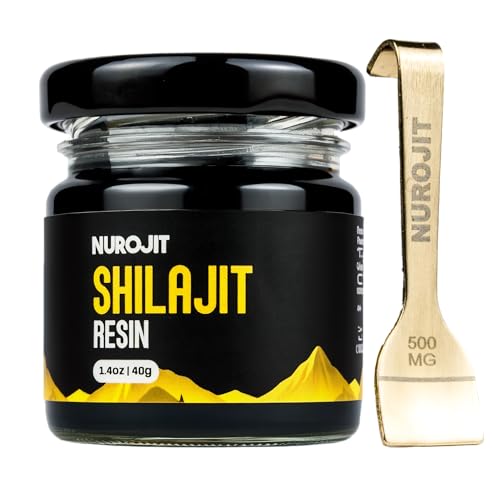
- Pürblack Live ResinLab-tested / studied
resin, ~300-500 mg/day — Premium purified resin, third-party heavy-metal tested; widely regarded as a reference-quality resin. - Nootropics Depot PrimaVie ShilajitClinically studied
capsules, 250 mg — PrimaVie, the standardised shilajit extract used in published human trials. - Zazzee Shilajit 40:1 Extract
capsules, 40:1 extract — Standardised to 50% fulvic acid. - Swanson Shilajit Extract
capsules, 400 mg, 60 count — Budget option from a long-established supplement brand.
As an Amazon Associate we earn from qualifying purchases. Shilajit quality varies widely — always choose a product with a published third-party heavy-metal test (COA) before buying.
A Note on the Evidence
The human research on shilajit is still early-stage—most trials are small, short, and sometimes combine shilajit with other compounds, making it difficult to isolate its effects. Shilajit can contain heavy metals (lead, mercury, arsenic) if not properly purified, so only use products that have been third-party tested for heavy metal content. Pregnant or breastfeeding individuals, people with kidney disease, and those taking prescription medications should consult a healthcare provider before use. Nothing in this article constitutes medical advice.
Frequently Asked Questions
Can I feel shilajit working within a few days?
It’s unlikely that any pharmacologically meaningful effect would be detectable within a few days. The clinical trials that found significant outcomes ran for 8 to 12 weeks [2][3]. Any sensation noticed in the first few days is more likely a placebo response or normal day-to-day variation in energy and mood.

How long should I take shilajit before deciding if it works for me?
Based on the trial literature, committing to a consistent 8-week minimum before evaluating results is reasonable. Studies measuring collagen synthesis [2] and fatigue-related muscular outcomes [1] both used 8-week windows and found statistically significant changes. Bone-related outcomes would require considerably longer.
Does shilajit affect testosterone, and if so, how long does that take?
Yes, and 90 days is the window the human data actually uses. A randomised, double-blind, placebo-controlled trial gave healthy men aged 45 to 55 purified shilajit 250 mg twice daily and, after 90 consecutive days, reported significantly higher total testosterone, free testosterone and DHEAS than placebo, with LH and FSH maintained [8]. An earlier open-label study in men with oligospermia used the same 90-day window and reported serum testosterone up 23.5% against their own baseline, though it had no placebo group [9]. A 2024 systematic review of 27 marketed testosterone boosters found that most do not raise total testosterone at all, and rated purified shilajit extract among the few possibly effective, specifically for men with late-onset hypogonadism [10]. Both trials studied middle-aged or subfertile men, so neither establishes an effect in younger men whose testosterone is already normal.
Will shilajit work faster if I take a higher dose?
The bone mineral density trial did find a dose-dependent effect, meaning higher doses preserved bone density more effectively [4]. However, higher doses also increase exposure to any contaminants in the product, and dose-response data in humans is limited. Exceeding typical supplemental doses without medical guidance is not recommended.
Does shilajit work differently for women versus men?
The available trials include both sexes, with some studies focused specifically on women—such as the postmenopausal bone density trial [4] and the skin transcriptome study [7]. The 12-week cardiometabolic trial included both men and women [3]. Current evidence doesn’t strongly suggest a different timeline by sex, but the research base is too small to draw firm conclusions.
Is it okay to take shilajit long-term?
Human trials have extended up to 12 weeks without reporting serious adverse events in the published literature, and the bone density trial [4] tracked safety alongside efficacy. That said, long-term safety data in humans is limited. Heavy metal contamination is a documented concern with raw or poorly processed shilajit, and anyone with kidney disease, pregnant or breastfeeding women, or those on prescription medications should consult a physician before using it.
References
- Keller JL et al. The effects of Shilajit supplementation on fatigue-induced decreases in muscular strength and serum hydroxyproline levels. Journal of the International Society of Sports Nutrition (2019). PMID 30728074
- Neltner TJ et al. Effects of 8 Weeks of Shilajit Supplementation on Serum Pro-c1α1, a Biomarker of Type 1 Collagen Synthesis: A Randomized Control Trial. Journal of dietary supplements (2024). PMID 36546868
- Martinez V et al. Effects of 12 Weeks of Chromium, Phyllanthus emblica Fruit Extract, and Shilajit Supplementation on Markers of Cardiometabolic Health, Fitness, and Weight Loss in Men and Women with Risk Factors to Metabolic Syndrome Initiating an Exercise and Diet Intervention: A Randomized Double-Blind, Placebo-Controlled Trial. Nutrients (2025). PMID 40573153
- Pingali U et al. Shilajit extract reduces oxidative stress, inflammation, and bone loss to dose-dependently preserve bone mineral density in postmenopausal women with osteopenia: A randomized, double-blind, placebo-controlled trial. Phytomedicine : international journal of phytotherapy and phytopharmacology (2022). PMID 35933897
- Alshubaily FA et al. Correlation between Antioxidant and Anti-Osteoporotic Activities of Shilajit Loaded into Chitosan Nanoparticles and Their Effects on Osteoporosis in Rats. Polymers (2022). PMID 36235920
- Das A et al. The Human Skeletal Muscle Transcriptome in Response to Oral Shilajit Supplementation. Journal of medicinal food (2016). PMID 27414521
- Das A et al. Skin Transcriptome of Middle-Aged Women Supplemented With Natural Herbo-mineral Shilajit Shows Induction of Microvascular and Extracellular Matrix Mechanisms. Journal of the American College of Nutrition (2019). PMID 31161927
- Pandit S et al. Clinical evaluation of purified Shilajit on testosterone levels in healthy volunteers. Andrologia (2016). PMID 26395129
- Biswas TK et al. Clinical evaluation of spermatogenic activity of processed Shilajit in oligospermia. Andrologia (2010). PMID 20078516
- Morgado A et al. Do “testosterone boosters” really increase serum total testosterone? A systematic review. International journal of impotence research (2024). PMID 37697053
These statements have not been evaluated by the Food and Drug Administration. This information is not intended to diagnose, treat, cure, or prevent any disease. Content is for informational purposes only and is not medical advice; consult a qualified healthcare provider before starting any supplement. As an Amazon Associate we earn from qualifying purchases.
