Shilajit — the tar-like resin harvested from Himalayan and Central Asian mountain rocks — has attracted serious attention as a mineral supplement, with preliminary research exploring its effects on energy metabolism, testosterone, and male fertility. But pregnancy is a context where most practitioners and researchers strongly advise against its use, and that caution is grounded in real evidence rather than reflexive conservatism.
The reasons span a documented adverse reaction in a pregnant woman, well-established concerns about heavy metal contamination in raw and low-quality shilajit products, and an almost complete absence of human safety data in pregnant populations. This article walks through what the evidence actually says — and does not say — so you can have an honest conversation with your healthcare provider.
Key Takeaways
- A published case report documents pseudohyperaldosteronism — a dangerous hormonal and blood pressure syndrome — in a pregnant woman who consumed shilajit [1].
- Raw and low-quality shilajit can contain heavy metals including lead and arsenic, which are known fetal developmental toxicants [2].
- No controlled clinical trials have established a safe dose or safe gestational window for shilajit use in pregnant humans.
- Animal research confirms shilajit has biological activity in the female reproductive system [3], but these findings cannot be used to infer safety in human pregnancy.
- Most positive shilajit research concerns male fertility and is not applicable to pregnant women.
What Shilajit Is and Why People Take It
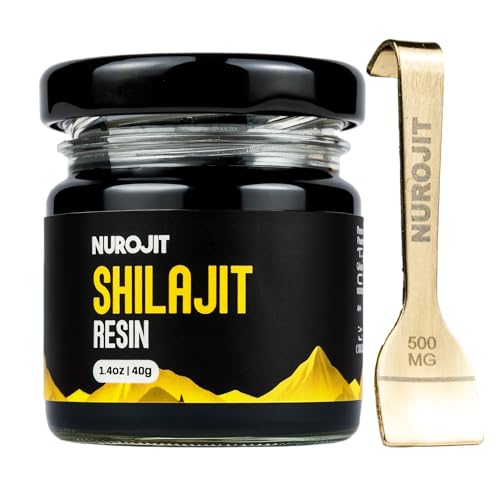
Shilajit (also called mumijo, mumiyo, or mineral pitch) is a blackish-brown exudate that seeps from rock crevices at high altitudes. It forms over centuries as plant and microbial matter decomposes under geological pressure. The resulting material is rich in fulvic and humic acids, dibenzo-alpha-pyrones, and a broad spectrum of trace minerals — all of which are thought to contribute to its proposed effects.
Researchers hypothesize that fulvic acid acts as an electron carrier that supports mitochondrial energy production, and that the dibenzo-alpha-pyrones may protect mitochondrial coenzyme Q10. These mechanisms underlie interest in shilajit for fatigue, athletic performance, and hormonal support. Most of the published clinical work, however, has focused on male reproductive health rather than pregnancy or women’s health more broadly.
A Documented Adverse Event During Pregnancy
The clearest pregnancy-specific warning in the scientific literature comes from a 2018 case report describing pseudohyperaldosteronism in a pregnant woman who consumed mumijo (shilajit) [1]. Pseudohyperaldosteronism is a syndrome that mimics the effects of excess aldosterone — the hormone that regulates sodium and potassium — producing hypertension, dangerously low potassium levels (hypokalemia), and disrupted fluid balance. The case was described as a licorice-like syndrome because the physiological picture resembles what happens when glycyrrhizin from licorice inhibits an enzyme involved in cortisol metabolism.
High blood pressure and electrolyte disturbances are serious concerns at any time, but they carry particular risk during pregnancy, where conditions like preeclampsia — a pregnancy-specific hypertension disorder — already place both mother and fetus at risk. While a single case report cannot establish causation or generalize to all pregnant women, it provides direct, clinical evidence that shilajit consumption during pregnancy can be associated with significant adverse hormonal and cardiovascular effects [1].

The mechanism behind this reaction is not fully understood, but it may relate to the complex mixture of bioactive compounds in shilajit interacting with enzymes involved in steroid hormone metabolism. This biological activity — which may be beneficial in other contexts — underscores why pregnancy, a state in which hormonal balance is tightly regulated, is not the time to introduce poorly characterized exogenous compounds.
Heavy Metal Contamination: An Amplified Risk During Pregnancy
Shilajit’s geological origin means it concentrates whatever minerals are present in the surrounding rock — and that includes heavy metals. A 2014 safety review noted that raw or unprocessed shilajit can contain concerning levels of heavy metals including lead, arsenic, and mercury, and emphasized that only properly processed and tested products should be consumed [2]. The same review acknowledged that the bioavailability and safety of shilajit’s constituent compounds depend heavily on the source and purification method used.
During pregnancy, the stakes around heavy metal exposure are considerably higher than at other life stages. Lead, mercury, and arsenic are all established developmental neurotoxicants that cross the placental barrier and can accumulate in fetal tissue. Even low-level exposure during critical developmental windows has been associated with long-term neurological and developmental effects in offspring. This does not mean all shilajit products are contaminated — but it does mean that a supplement category where product quality varies enormously and regulation is minimal carries an outsized risk during pregnancy [2].
Third-party testing can help identify products that meet purity standards, but no regulatory body currently certifies shilajit specifically for use in pregnancy, and no manufacturer can claim to have demonstrated safety in pregnant humans through controlled clinical trials.
The Absence of Human Safety Data in Pregnant Populations
Clinical trials on shilajit in humans are limited in number and have focused almost entirely on male populations — most notably studies examining sperm parameters and testosterone in men with oligospermia or subfertility [4]. This is not a minor data gap. The absence of controlled safety data in pregnant women means no dose has been established as safe, no gestational window has been studied, and no fetal outcomes have been tracked in a rigorous scientific context.
In regulatory and clinical practice, the default position when human safety data is absent — especially in pregnancy — is to avoid the substance unless the benefit clearly outweighs the risk. For a supplement like shilajit, where potential benefits for pregnant women have not been demonstrated (and where adequate nutrition and prenatal care already address most mineral status needs), that risk-benefit calculation strongly favors avoidance.
What Animal Research Tells Us About Reproductive Effects
Animal studies add some context, though they cannot be directly applied to human pregnancy. A rat study examining long-term shilajit administration found effects on both spermatogenesis and oogenesis — that is, on egg development as well as sperm production [3]. Observing that shilajit exerts biological activity on the female reproductive system in animal models is relevant because it confirms the compound is not hormonally inert, even if the direction and magnitude of effects in pregnant humans remain unknown.
Research in male mice has shown that shilajit can modulate steroidogenesis — the biochemical pathway by which sex hormones are produced — and influence reproductive tissue dynamics [5]. Separately, studies in male mice have demonstrated that shilajit’s antioxidant properties can help restore fertility compromised by heavy metal exposure, including cadmium [6]. These findings are biologically interesting, but they describe effects in non-pregnant male animals and cannot be extrapolated to support shilajit use during human pregnancy.
What About Pre-Conception Use and Fertility?
Most of the positive fertility-related research on shilajit concerns male infertility specifically. A clinical trial in men with low sperm count found that processed shilajit improved sperm count and motility over 90 days [4]. Research in buffalo bull sperm has also shown that shilajit-derived compounds support sperm viability under preservation conditions [7]. This body of evidence is relevant for couples dealing with male-factor infertility but does not address female fertility during the pre-conception phase or safety once pregnancy is established.
Women considering shilajit as a pre-conception supplement — with the goal of supporting mineral status or energy before trying to conceive — should discuss this with a healthcare provider. The current evidence base is insufficient to recommend it for this purpose, and once pregnancy is confirmed, use should be discontinued based on the documented adverse event and contamination concerns outlined above.
🛒 Where to Buy Shilajit
- Pürblack Live ResinLab-tested / studied
resin, ~300-500 mg/day — Premium purified resin, third-party heavy-metal tested; widely regarded as a reference-quality resin. - Nootropics Depot PrimaVie ShilajitClinically studied
capsules, 250 mg — PrimaVie, the standardised shilajit extract used in published human trials. - Zazzee Shilajit 40:1 Extract
capsules, 40:1 extract — Standardised to 50% fulvic acid. - Swanson Shilajit Extract
capsules, 400 mg, 60 count — Budget option from a long-established supplement brand.
As an Amazon Associate we earn from qualifying purchases. Shilajit quality varies widely — always choose a product with a published third-party heavy-metal test (COA) before buying.
A Note on the Evidence
This article is informational only and does not constitute medical advice. The evidence base for shilajit in general is still early-stage and largely derived from small trials and animal studies; evidence specifically addressing pregnancy is extremely limited and includes a documented adverse event [1]. Anyone who is pregnant, planning to become pregnant, or breastfeeding should avoid shilajit and consult a qualified healthcare provider before using any supplement.
Frequently Asked Questions
Can shilajit cause a miscarriage?
There is no published research directly linking shilajit to miscarriage. However, the documented case of pseudohyperaldosteronism — which caused serious blood pressure and electrolyte disruption in a pregnant woman — illustrates that the compound can produce clinically significant adverse effects during pregnancy [1]. Given the absence of safety data, it is not possible to rule out risks to the pregnancy, which is precisely why avoidance is recommended.

What happened in the case of the pregnant woman who took shilajit?
A 2018 report described a pregnant woman who developed pseudohyperaldosteronism after consuming mumijo (shilajit) [1]. She presented with high blood pressure and low potassium levels — a hormonal pattern resembling excessive aldosterone activity, similar to what is seen with overconsumption of licorice. The syndrome resolved after she stopped taking the supplement.
Is shilajit safe before pregnancy, while trying to conceive?
The published evidence on shilajit and fertility is concentrated in male populations. A clinical trial found improvements in sperm count and motility in men with oligospermia [4], but there are no equivalent trials in women trying to conceive. Given the heavy metal contamination risk [2] and the documented adverse effect in pregnancy [1], women should consult a healthcare provider before using shilajit at any reproductive life stage.
Why is heavy metal contamination in shilajit a bigger concern during pregnancy?
Heavy metals such as lead, mercury, and arsenic cross the placental barrier and can accumulate in fetal tissue, where they may interfere with neurological and organ development. A safety review of shilajit acknowledged that raw products can contain elevated heavy metal levels and that processing and testing are essential [2]. Because regulation of shilajit supplements is inconsistent and product quality varies widely, the contamination risk is a practical and meaningful concern during pregnancy.
Does shilajit affect hormones during pregnancy?
Shilajit contains bioactive compounds that appear to interact with steroid hormone metabolism, as suggested both by the pseudohyperaldosteronism case during pregnancy [1] and by animal research showing effects on steroidogenesis [5]. Pregnancy involves a tightly regulated hormonal environment, and introducing exogenous compounds with hormone-modulating potential carries unpredictable risks. This is one of the core reasons practitioners advise against its use.
Has shilajit been studied in pregnant animals?
One rat study examined the effects of chronic shilajit administration on both sperm production and egg development (oogenesis), confirming the compound has reproductive effects in female animals as well as male [3]. However, this study was not designed to assess pregnancy safety outcomes, and findings in rats cannot be directly applied to human pregnancy. It does confirm that shilajit is biologically active in the female reproductive system.
References
- Stavropoulos K et al. Pseudohyperaldosteronism due to mumijo consumption during pregnancy: a licorice-like syndrome. Gynecological endocrinology : the official journal of the International Society of Gynecological Endocrinology (2018). PMID 29933704
- Stohs SJ et al. Safety and efficacy of shilajit (mumie, moomiyo). Phytotherapy research : PTR (2014). PMID 23733436
- Park JS et al. The spermatogenic and ovogenic effects of chronically administered Shilajit to rats. Journal of ethnopharmacology (2006). PMID 16698205
- Biswas TK et al. Clinical evaluation of spermatogenic activity of processed Shilajit in oligospermia. Andrologia (2010). PMID 20078516
- Rajpoot A et al. Shilajit mitigates chemotherapeutic drug-induced testicular toxicity: Study on testicular germ cell dynamics, steroidogenesis modulation, and Nrf-2/Keap-1 signaling. Journal of Ayurveda and integrative medicine (2024). PMID 39121783
- Mishra RK et al. Profertility effects of Shilajit on cadmium-induced infertility in male mice. Andrologia (2018). PMID 29947420
- Sultan J et al. Asphaltum Improves the Post-thaw Quality and Antioxidant Status of Nili Ravi Buffalo Bull Sperm. Biopreservation and biobanking (2021). PMID 33502921
These statements have not been evaluated by the Food and Drug Administration. This information is not intended to diagnose, treat, cure, or prevent any disease. Content is for informational purposes only and is not medical advice; consult a qualified healthcare provider before starting any supplement. As an Amazon Associate we earn from qualifying purchases.
