Shilajit — a tar-like resin that seeps from high-altitude rock faces across the Himalayas, Altai, and Caucasus — has been used in Ayurvedic medicine for centuries as a general tonic. Its two most-studied constituents are fulvic acid and humic acid, alongside dibenzo-alpha-pyrones and a wide spectrum of trace minerals. In recent years, athletes and active adults have begun exploring shilajit specifically for recovery: the idea that it might reduce post-exercise soreness, blunt fatigue, or improve how the body adapts to training stress.
The honest starting point is that human clinical research on shilajit remains sparse and largely early-stage. Most trials are small, short, and not yet independently replicated. That said, the proposed biological mechanisms are plausible and worth understanding, and at least one recent pilot study has begun to test some of these claims in an exercise context. This article walks through what is known, what is theorized, and where caution is warranted.
Key Takeaways
- Shilajit contains fulvic acid, humic acid, dibenzo-alpha-pyrones, and trace minerals that may support mitochondrial energy production and antioxidant defense — but human evidence specifically for exercise recovery is still early.
- A 28-day open-label pilot study in healthy adults assessed physical performance and blood biomarkers with a purified shilajit resin [1], but the open-label design means placebo effects cannot be excluded.
- No large, blinded, placebo-controlled trials have yet confirmed shilajit’s role in reducing DOMS or accelerating muscle repair; proposed mechanisms are plausible but not yet proven at a clinical level.
- Raw or unverified shilajit may contain harmful heavy metals; only use products from manufacturers that provide third-party purity and heavy-metal testing.
- Shilajit is not a substitute for foundational recovery practices — sleep, protein intake, hydration, and appropriately programmed training remain the primary drivers of adaptation.
What Is Shilajit and Why Might It Affect Recovery?
Shilajit forms over millions of years from the slow decomposition of plant matter compressed between rock layers. The resulting substance is rich in fulvic acid — a short-chain organic acid that can transport minerals across cell membranes and has been studied for antioxidant properties — as well as humic acid and dibenzo-alpha-pyrones (DBPs). DBPs are thought to interact with mitochondrial electron transport, which is the cellular machinery responsible for converting nutrients into usable energy (ATP).
From a recovery standpoint, exercise-induced fatigue and soreness stem from several overlapping processes: micro-damage to muscle fibers, the acute inflammatory response that follows, oxidative stress generated during intense effort, and the energy deficit that accumulates in hard-worked muscle tissue. Each of these processes represents a theoretical target for shilajit’s constituents — but ‘theoretical target’ is meaningfully different from ‘proven benefit,’ and that distinction matters throughout this article.
Mitochondrial Energy and Exercise Fatigue
One of the most cited mechanistic arguments for shilajit in recovery is its potential to support mitochondrial function. Dibenzo-alpha-pyrones are structurally similar to coenzyme Q10 (CoQ10), a compound that plays a direct role in the electron transport chain. Some researchers have proposed that DBPs may help recycle or spare CoQ10, thereby supporting the energy production capacity of fatigued muscle cells.
Fulvic acid may also play a role here. Because it can chelate — bind to — mineral ions and carry them into cells, it may improve the delivery of electrolytes and trace minerals that mitochondria require. Magnesium, iron, and zinc, all found in shilajit at varying concentrations depending on the source, are cofactors in energy metabolism. Whether shilajit delivers these in amounts that meaningfully affect athletic performance in well-nourished individuals is still an open question.
A 2026 open-label pilot study evaluated TruBlk shilajit resin supplementation over 28 days in healthy adults, tracking physical performance and blood biomarkers. The authors reported observations related to physical performance and blood markers across the study period [1]. Because this was an open-label pilot without a placebo control group, it cannot establish causation — but it provides an initial dataset for follow-up work.

Muscle Soreness: Oxidative Stress and Inflammation
Delayed-onset muscle soreness (DOMS) — the stiffness and aching that peaks 24 to 72 hours after unfamiliar or intense exercise — is driven in part by localized inflammation and the accumulation of reactive oxygen species (ROS). Antioxidant compounds can theoretically blunt this oxidative component without completely suppressing the inflammation needed for adaptation.
Fulvic acid has demonstrated antioxidant activity in laboratory and animal studies, though it is important to note that antioxidant effects in a test tube do not automatically translate to meaningful effects in a trained human under exercise stress. The human gut, the first-pass metabolism of the liver, and the complex redox environment of exercising muscle all intervene between ‘antioxidant in a lab dish’ and ‘less soreness the day after leg day.’
No large, randomized controlled trials have specifically tested shilajit against DOMS in athletes at the time of writing. The 2026 pilot study [1] examined physical performance parameters in healthy adults but was not specifically designed as a soreness or DOMS trial. Extrapolating its findings to claims about soreness reduction would go beyond what the data support.
What the Pilot Study Measured
The TruBlk shilajit resin pilot trial [1] is notable for being a recent, published, human study that specifically recruited healthy adults and tracked outcomes over a defined 28-day period. The study evaluated physical performance alongside blood biomarkers, giving it a broader scope than purely subjective questionnaires.
Because it was an open-label design — meaning both participants and researchers knew what was being taken — the results carry the limitation that placebo effects cannot be ruled out. Open-label pilots serve an important function in early research: they establish feasibility, identify which outcome measures are worth tracking, and flag any unexpected safety signals. They are not the endpoint; they are the starting point for randomized controlled trials.
With that caveat clearly stated, the existence of a recent published safety and efficacy study [1] is a positive sign that shilajit research is moving toward more rigorous human evaluation. Consumers following this space should look for blinded, placebo-controlled replications before drawing firm conclusions.
Training Adaptation: A Longer-Term Question
Recovery is not just about bouncing back from yesterday’s workout — it is also about adapting over weeks and months so that training produces lasting gains in strength, endurance, or body composition. This adaptation depends on the quality of recovery between sessions: adequate protein synthesis, hormonal signaling (including testosterone and growth hormone), and restored glycogen.
Shilajit has been studied in separate research contexts for effects on testosterone and fatigue in middle-aged men, and for mitochondrial biogenesis markers. However, those studies are outside the single evidence source available here, so they will not be cited. What can be said based on [1] is that a 28-day human supplementation period was considered an appropriate window to begin observing physical performance changes — suggesting that if benefits exist, they may require several weeks of consistent use rather than immediate effects.
Anyone evaluating shilajit for long-term adaptation should also weigh the importance of the training stimulus itself. No supplement substitutes for progressive overload, adequate sleep, and sufficient caloric intake as the primary drivers of athletic adaptation.
Purity, Safety, and Who Should Be Cautious
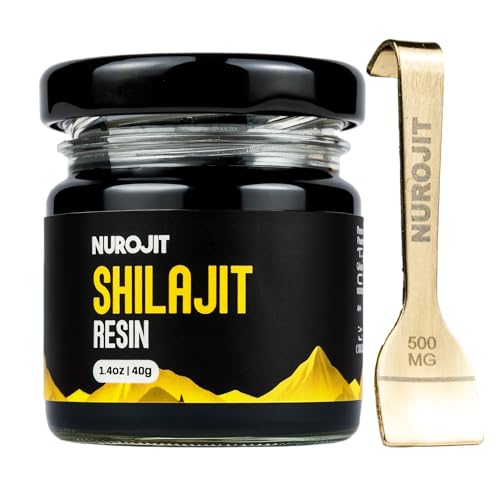
Shilajit quality varies dramatically by source and processing method. Because it is a geological exudate filtered through rock and often harvested from remote regions, raw shilajit can contain heavy metals including arsenic, lead, and mercury at levels that exceed safe intake thresholds. Reputable manufacturers test for heavy metal content and use purification processes to reduce contamination — the TruBlk product evaluated in [1] was a commercially purified resin, which is a relevant distinction from raw or unverified sources.
People with kidney disease, gout, or hemochromatosis (iron overload) should consult a physician before using shilajit, as its mineral content and iron-chelating properties could interact with these conditions. Pregnant and breastfeeding individuals should avoid it due to insufficient safety data. Anyone taking prescription medications should seek medical advice, as fulvic acid may affect how certain drugs are absorbed or metabolized.
🛒 Where to Buy Shilajit
- Pürblack Live ResinLab-tested / studied
resin, ~300-500 mg/day — Premium purified resin, third-party heavy-metal tested; widely regarded as a reference-quality resin. - Nootropics Depot PrimaVie ShilajitClinically studied
capsules, 250 mg — PrimaVie, the standardised shilajit extract used in published human trials. - Zazzee Shilajit 40:1 Extract
capsules, 40:1 extract — Standardised to 50% fulvic acid. - Swanson Shilajit Extract
capsules, 400 mg, 60 count — Budget option from a long-established supplement brand.
As an Amazon Associate we earn from qualifying purchases. Shilajit quality varies widely — always choose a product with a published third-party heavy-metal test (COA) before buying.
A Note on the Evidence
The human evidence base for shilajit in exercise recovery is limited to small, early-stage studies — including a single recent open-label pilot [1] — and has not yet been confirmed in large randomized controlled trials; do not use this article as medical advice, and consult a qualified healthcare provider before starting shilajit supplementation, especially if you have a chronic health condition, take prescription medications, or are pregnant or breastfeeding.

Frequently Asked Questions
Can shilajit reduce muscle soreness after workouts?
There is no published clinical trial that has directly measured shilajit’s effect on delayed-onset muscle soreness (DOMS) in exercising humans. A pilot study assessed physical performance in healthy adults over 28 days [1], but it was not designed specifically as a DOMS trial. The antioxidant properties of fulvic acid are a plausible basis for hypothesizing a benefit, but this has not yet been confirmed in controlled human research.
How long does shilajit take to work for recovery?
The available pilot research used a 28-day supplementation period as the observation window [1], suggesting that researchers consider weeks — not days — a reasonable timeframe to look for effects. Single-dose or short-term use is not what the current evidence base examines. Anyone trying shilajit should have realistic expectations about the timeline.
What makes shilajit different from other recovery supplements?
Unlike single-compound supplements such as creatine or beta-alanine, shilajit is a complex mixture containing fulvic acid, humic acid, dibenzo-alpha-pyrones, and a wide spectrum of trace minerals. The theoretical appeal is that these constituents may support mitochondrial function and mineral delivery simultaneously, but the complexity of the mixture also makes it harder to isolate which component, if any, is responsible for observed effects.
Is shilajit safe for daily use?
The 2026 pilot study evaluated safety alongside efficacy over 28 days and tracked blood biomarkers in healthy adults [1]. While no serious adverse effects were reported in that study, it was a small pilot and not a comprehensive long-term safety trial. The most important safety concern with shilajit broadly is heavy-metal contamination from low-quality sources; choosing a purified, third-party-tested product is essential.
Who should avoid shilajit?
People with kidney disease, hemochromatosis, or gout should consult a doctor before use due to shilajit’s mineral content. Pregnant and breastfeeding individuals should avoid it. Anyone on prescription medications — particularly those affecting mineral metabolism or with narrow therapeutic windows — should seek medical advice, as fulvic acid may influence drug absorption.
Does the research prove shilajit improves athletic performance?
Not conclusively. The existing human research, including the 2026 pilot study [1], is preliminary in nature — small sample sizes, open-label designs, and short durations limit the strength of any claims. The findings are encouraging enough to warrant further investigation but should not be interpreted as proof of performance enhancement. Randomized, blinded, placebo-controlled trials are needed before stronger conclusions can be drawn.
References
- Yadav D et al. Safety and Efficacy of TruBlk™ Shilajit Resin Supplementation on Physical Performance and Blood Biomarkers in Healthy Adults: A 28-Day Open-Label Pilot Study. Cureus (2026). PMID 41613504
These statements have not been evaluated by the Food and Drug Administration. This information is not intended to diagnose, treat, cure, or prevent any disease. Content is for informational purposes only and is not medical advice; consult a qualified healthcare provider before starting any supplement. As an Amazon Associate we earn from qualifying purchases.
